
November is the month of the first racking. From now until spring, anyone who makes wine at home or keeps bulk wine in a demijohn asks the same questions: when to rack, how many times, and with which moon?
In this guide you will find our answers: the waning-moon dates for winter 2026-2027, the racking calendar for the first year and the mistakes we see most often.
What racking is and why it matters
When fermentation ends, the wine is still cloudy. Over the following weeks the lees settle at the bottom of the demijohn: spent yeast, fragments of skin and pulp, and the small tartrate crystals you sometimes also find on the cork.
Racking separates the clear wine from this deposit. If the wine stays on the lees too long, it can develop unpleasant smells of rotten eggs or cooked cabbage. They come from sulphur compounds and, unless dealt with quickly, become very hard to remove.
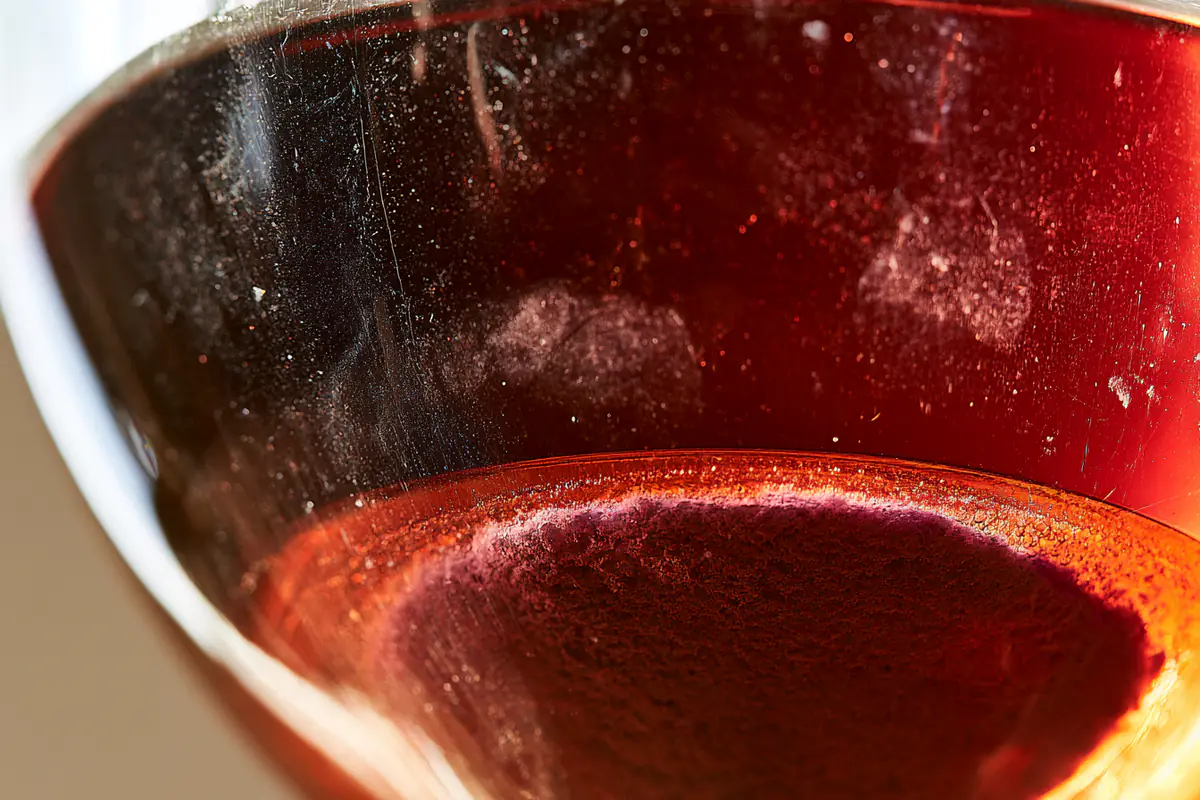
Even after racking, the wine keeps dropping sediment for a few weeks: that is why one racking is not enough.
The racking calendar for the first year
In the first year you usually rack three or four times. If the wine stays in the cellar longer, from the second year two rackings are enough: one in winter and one in summer.
- November1st rackingAs soon as fermentation has finished, usually two or three weeks after pressing off. The coarse lees are removed; reds can take a little air, whites as little as possible.
- December – January2nd rackingCold makes tartrate less soluble: the crystals drop out and the deposit compacts. This is the racking that makes the wine truly clear.
- March – April3rd rackingBefore the warm weather arrives. After this racking, whites are ready for bottling.
- June – July4th rackingOnly for wines that stay in the cellar to age.
If the grapes were affected by mould or rot, perhaps after a hailstorm, rack earlier: the lees of these grapes contain enzymes that make the wine oxidise and turn brown, so the sooner you separate it, the better.
Racking by the moon: waning or full?
Tradition is not unanimous on this.
- The most widespread rule, in Veneto and much of Italy, is the waning moon: the wine is said to be “calmer” and the lees stay at the bottom.
- Other families prefer the full moon or the days right after it.
In practice the two rules almost coincide, because right after the full moon the moon is already waning. The window everyone agrees on therefore runs from the day after the full moon to two days before the new moon; the days around the new moon are avoided.
Waning-moon dates for racking in winter 2026-2027
Each window runs from the day after the full moon to two days before the new moon. Moon phases are official, in Italian time.
| Racking | Recommended days | Useful weekends | New moon (avoid) |
|---|---|---|---|
| 1st racking (new 2026 wine) | Wednesday 25 November – Monday 7 December | Sat 28 – Sun 29 Nov, Sat 5 – Sun 6 Dec | Wed 9 Dec 2026 |
| 2nd racking | Friday 25 December 2026 – Tuesday 5 January | Sat 26 – Sun 27 Dec, Sat 2 – Sun 3 Jan | Thu 7 Jan 2027 |
| 2nd racking (alternative) | Saturday 23 January – Thursday 4 February | Sat 23 – Sun 24 Jan, Sat 30 – Sun 31 Jan | Sat 6 Feb 2027 |
| 3rd racking | Monday 22 February – Saturday 6 March | Sat 27 – Sun 28 Feb, Sat 6 Mar | Mon 8 Mar 2027 |
| 3rd racking (alternative) | Tuesday 23 March – Monday 5 April | Sat 27 – Sun 28 Mar, Sat 3 – Sun 4 Apr | Wed 7 Apr 2027 |
| 4th racking (if needed) | Sunday 20 June – Friday 2 July | Sun 20 Jun, Sat 26 – Sun 27 Jun | Sun 4 Jul 2027 |
For bottling dates, see our 2027 lunar bottling calendar.
Does the moon matter? The weather matters more
No study has ever shown that the moon affects wine. In fact, a study by Lincoln University (New Zealand) had 19 wine professionals taste the same wines blind on different lunar days, and found no difference. There is, however, one factor tradition has always respected that makes more sense: the weather.
Rack in clear, dry weather, ideally with high pressure. This is not just a Veneto rule: in France many winemakers do the same, and Domaine Ponsot in Burgundy says it always racks and bottles following the lunar calendar and “with high atmospheric pressure”. Cellar experience says that on days of rain, scirocco or storms the wine “moves” and comes out cloudier. A plausible physical explanation exists: when air pressure drops, some of the carbon dioxide dissolved in the wine comes out as small bubbles that can lift the lees from the bottom. To be clear, though, nobody has ever measured this, not even in France, where the trade press reports only producers’ accounts: it is a reasonable rule of thumb, not a scientific certainty. Either way, choosing a cool, stable day has no downside.
Our advice: pick the lunar window and, within it, the driest and most stable day. If it rains all week, wait for the next window.
How to rack well
1. Prepare a clean container
The demijohn or barrel receiving the wine must be washed and sanitised. A dirty container can ruin months of work in a few hours.
2. Don’t move the full container
If you can, the day before place the demijohn higher than the receiving container and then leave it alone: every movement stirs the deposit back up.
3. Keep the tube above the lees
Use a food-grade tube and keep its end well above the lees. Winemaking shops sell racking canes with a small cap at the bottom that draw the wine from above: they are cheap and very useful. As soon as the wine starts coming out cloudy, stop. Better to leave a finger of wine at the bottom than to carry the lees over.
4. With or without air?
- First racking of reds: with air. Let the wine fall from a height so it picks up a little oxygen. This helps remove the rotten-egg smell that sometimes forms during fermentation; thanks to their tannins, reds tolerate this small dose of oxygen well.
- Whites and rosés: little air, even at the first racking. They contain few tannins, so they oxidise easily and lose aroma. Let the wine run in gently, without splashing. If you do notice a rotten-egg smell, though, racking with air helps them too.
- Later rackings: no air. Run the tube to the bottom of the new container so the wine goes in without splashing. From now on oxygen harms the wine.
5. Top up straight away
After racking the level drops, because the lees stayed behind in the old container. Fill the demijohn up to the neck with the same wine (keep a few bottles aside for this). Empty space is full of air, and air encourages oxidation and acetic bacteria, which turn wine into vinegar. Check the level every two weeks.
6. Metabisulphite: the right dose
At each racking a small dose of potassium metabisulphite is usually added; you can buy it in winemaking shops. Dissolved in wine it releases sulphur dioxide, about half a gram for every gram of product, which protects the wine from oxidation and unwanted microorganisms. It is a practice admitted by the international code of the OIV, the International Organisation of Vine and Wine.
The usual dose is 2–5 grams per hectolitre (100 litres): for a 54-litre demijohn that means about 1–2.5 grams. Lower doses do little: the French Institute of Vine and Wine (IFV) states that protecting wine from oxygen requires at least 10–20 mg of free sulphur dioxide per litre, and part of what you add binds immediately to other substances in the wine and stops working. Dissolve the powder in a glass of wine and pour it into the container as you fill it, so it mixes evenly.
Two important points:
- For reds, at the first racking, stay at the low end: too much sulphur dioxide can block malolactic fermentation, the second natural fermentation that softens the wine.
- Don’t increase the dose “to be safe”: the excess can be smelled (according to the IFV from 20–60 mg/L of free sulphur dioxide, depending on the wine’s acidity), and the law sets maximum limits for sulphur dioxide in wine. If in doubt, ask whoever sold you the product, or ask us.
The most common mistakes
- Racking on a rainy or low-pressure day: the wine comes out cloudy.
- Moving the demijohn on the same day: the lees go back into suspension.
- Drawing too low so as not to “waste” wine.
- Leaving the demijohn half empty after racking.
- Skipping the winter racking: thanks to the cold, it is the one that makes the wine truly clear.
- Using unsanitised containers, especially old plastic ones. Read why in our guide on demijohns vs plastic containers.
And if you buy bulk wine?
The bulk wine you buy at our cellar is already racked, clear and ready: you don’t need to repeat the first-year rackings. Just store it well and bottle it at the right time.
We are in Roncadelle di Ormelle and have been making wine since 1860. If this year you’d rather have wine that’s ready, choose from our wines, bulk or bottled: call us and we’ll prepare it for you.
Sources
- OIV, International Code of Oenological Practices, sheet II.3.4.4 “Sulphiting” (resolution OIV-OENO 7/2003): purposes of sulphur dioxide (microbiological stability, antioxidant action, inhibition of oxidase enzymes)
- OIV, International Oenological Codex, monograph COEI-1-POTANH “Potassium metabisulphite”: SO₂ content of the commercial product
- ITV France / IFV (Institut Français de la Vigne et du Vin), Caboulet D., Maîtrise du sulfitage, Cahiers Itinéraires no. 3: 1 g of metabisulphite ≈ 0.5 g of SO₂; free SO₂ levels for antioxidant (10–20 mg/L) and antibacterial (15–25 mg/L) action; perception threshold 20–60 mg/L
- de Nadaillac C. (2022), “Vinification : mieux vaut coller et soutirer par beau temps”, Réussir Vigne: racking under high pressure in French producers’ practice (Domaine Ponsot and others), with no measured data
- Ribéreau-Gayon P., Glories Y., Maujean A., Dubourdieu D., Handbook of Enology, vols. 1 and 2 (Wiley): racking and separation from the lees, reductive sulphur compounds and their removal by aeration, use of sulphur dioxide, inhibition of malolactic bacteria
- Parr W. V. et al. (2017), “Expectation or Sensorial Reality? An Empirical Investigation of the Biodynamic Calendar for Wine Drinkers”, PLoS ONE 12(1): e0169257: no effect of lunar phases on wine taste
- UC Davis, Department of Viticulture and Enology, Off-character compounds – sulfur compounds: hydrogen sulphide (rotten eggs) and methanethiol (cooked cabbage)
- Osborne J., Oregon State University Extension: separate wine early from the gross lees, which promote sulphides and mercaptans
- AWRI (Australian Wine Research Institute), Managing Botrytis-infected fruit: lees from botrytised grapes contain laccase; rack as soon as fermentation ends
- AWRI, Cold stabilisation: cold makes potassium bitartrate (tartrate) precipitate
- AWRI, Malolactic fermentation: above about 40 mg/L of total sulphur dioxide, malolactic fermentation is hindered
- Iowa State University Extension, Sulfur Dioxide Management (publication 16425): potassium metabisulphite theoretically contains 57% SO₂; dose calculation by volume
- Oklahoma State University Extension, Understanding Free Sulfur Dioxide (FSO₂) in Wine: recommended free SO₂ levels and why additions must be repeated over time
- OIV, resolution OIV-OENO 631-2020 on sulphur dioxide management: role of SO₂ after malolactic fermentation against lactic bacteria, acetic bacteria and yeasts
- Commission Delegated Regulation (EU) 2019/934, Annex I B: maximum total sulphur dioxide limits in wine (150 mg/L for dry reds, 200 mg/L for dry whites and rosés)
- U.S. Naval Observatory, Phases of the Moon (aa.usno.navy.mil): lunar phase dates 2026-2027, converted to Italian time