You’ve just filled your demijohn or plastic tank with bulk wine and you’re wondering: how long will it last? It’s the question our customers ask us almost every week here in Roncadelle di Ormelle. The honest answer is: it depends on how you store it, and the difference between doing it right and doing it wrong can mean weeks or even months more life for your wine.
Enemy number one: oxygen
Before talking about timescales, you need to understand what makes bulk wine deteriorate. It’s not heat, not light, not time itself.
It’s oxygen.
When wine comes into contact with air, two processes begin:
- Chemical oxidation: aromas fade, colour turns orange or brownish, the taste becomes flat and “cooked”
- Acidification: bacteria present in the air (Acetobacter) convert the alcohol into acetic acid. In plain terms: the wine turns to vinegar
The most visible warning sign is the “fioretta”: a whitish film that forms on the surface when the wine has been exposed to air too long. If you see it, the wine is already compromised.
Glass demijohn: the best choice
Glass is inert, releases nothing, and doesn’t let oxygen through. It’s the ideal container for storing bulk wine.
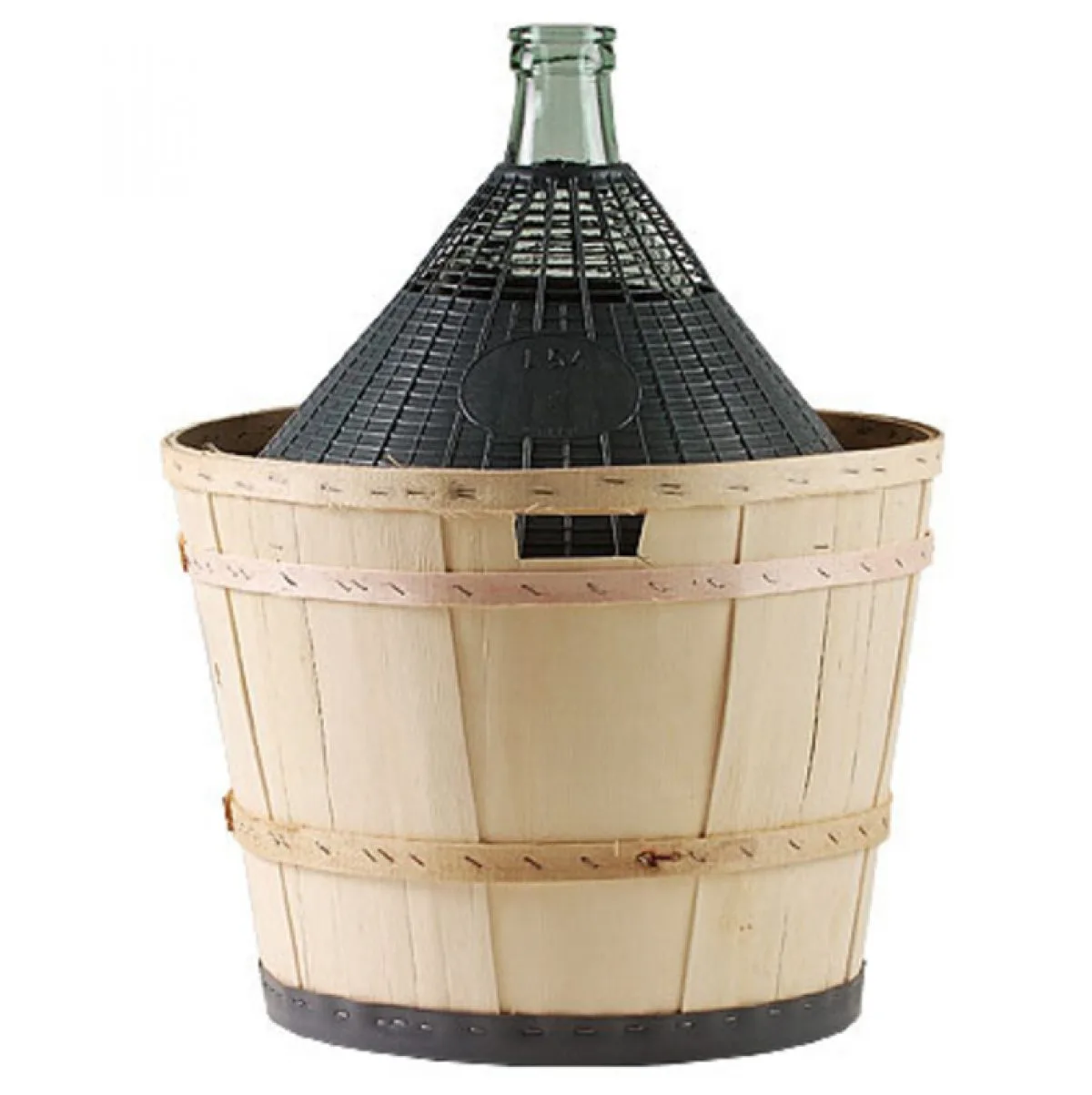
But timescales vary enormously depending on how you manage it:
- Full demijohn with airtight stopper, cool cellar: up to 6 months without problems, even 12 with a little care
- Half-empty demijohn with no precautions: 2–3 weeks before the wine starts to deteriorate
- Open demijohn in summer at 25°C+: as little as 3–5 days
The key is to eliminate empty space. Every time you draw wine off, the space left behind fills with air — and that is your main source of problems.
What to do when the demijohn is half empty: transfer the wine into a smaller container that you can fill almost to the top. A 5-litre bottle with little wine in it deteriorates within days; a full 5-litre bottle lasts weeks.
Food-grade plastic tank (PET): proceed with care
White plastic tanks are convenient to carry and lightweight. But they have two drawbacks:
- PET walls are slightly permeable to oxygen: you can’t see it, but oxygen slowly seeps in even without opening the container
- With heat, plastic can impart off-flavours to the wine, altering its aromatic profile
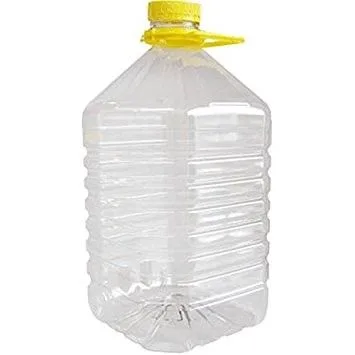
For this reason, the plastic tank is fine for transporting wine or for consumption within 7–10 days. It is not suitable for longer storage, especially in summer.
Temperature: how much does it really matter?
Enormously. Here are the ideal temperatures by wine type:
| Wine type | Ideal temperature | Maximum tolerable temperature |
|---|---|---|
| Structured red (Raboso, Cabernet) | 12–16°C | 20°C |
| Young, light red | 12–14°C | 18°C |
| Rosé | 10–12°C | 16°C |
| White and sparkling | 8–12°C | 14°C |
At our winery in Ormelle, bulk wine is kept at a constant 12–14°C. When it arrives at your home, try to store it somewhere cool: a cellar, a north-facing garage, an underground room. The fridge works well for whites, but takes up too much space for demijohns.
Watch out for temperature swings: moving a demijohn from a 12°C cellar to a summer garage at 30°C is worse than keeping it at a steady 20°C. Consistency of temperature matters more than the absolute value.
Red, white or rosé: which lasts longest?
Tannic reds like Raboso, Cabernet and Merlot are more resistant to oxidation. Tannins (the polyphenols that give you that astringent sensation in the mouth) act as natural antioxidants: they “sacrifice themselves” to protect the wine’s aromatic components. A Raboso with a high tannin load naturally has a longer life in the demijohn compared to a Pinot Grigio.
White and sparkling wines are the most delicate: they lose their floral and fruity aromas quickly, and sparkling wines lose their CO₂. We recommend consuming them within 4–8 weeks of opening.
How to tell if the wine has gone off
Before drinking, check:
- Colour: the red should not be orange or brick-coloured; the white should not be golden-brown
- Smell of vinegar or acetone: sign of acidification
- “Marsala” or “cooked” smell: advanced oxidation
- Unusual fizzing in a still wine: bacterial re-fermentation underway
- White film on the surface: fioretta
If in doubt, bring us a sample. We are always happy to taste it at the winery and give you an honest opinion, free of charge.
The wine we supply leaves in perfect condition. Keeping it that way until your glass depends on how you treat it. With the right care, a good glass demijohn in a cool cellar will give you months of satisfaction.